Understanding Performance Arts Today
Performance arts encompass a wide array of forms, including theatre, dance, physical theatre, musical theatre, experimental performance, and more. Each discipline shares a commitment to storytelling and emotional communication, yet they differ in the tools, techniques, and conventions they employ. Theatre often emphasizes narrative, character development, and spoken text, while dance prioritizes physicality, timing, and spatial awareness. Many modern performances blend these disciplines, reflecting an increasing appetite for interdisciplinary work that challenges traditional boundaries.
Central to performance arts is the live aspect. Unlike recorded media, live performance is temporal and ephemeral; every show is unique, shaped by the performers, the audience, and the space. This immediacy demands adaptability, focus, and a deep understanding of collaboration. Artists must synchronize their efforts across acting, choreography, music, design, and technical support to create a cohesive experience that resonates with audiences.
Core Artistic Disciplines
Before exploring each artistic discipline, it’s important to recognize that each contributes uniquely to storytelling and audience experience. These areas are interdependent, with collaboration driving creative impact.
Acting and Performance
Acting forms the foundation of most live storytelling. Actors must combine emotional depth, physical awareness, and vocal skill to bring characters and narratives to life.
Acting is at the heart of most performance arts, involving the embodiment of characters and the communication of stories through voice, movement, and emotional expression. Training focuses on building versatility, presence, and an understanding of dramatic structure. Actors study text analysis, improvisation, and character development while refining their physical and vocal skills.
In contemporary performance, acting often intersects with dance, music, and multimedia elements. Physical theatre, for example, emphasizes movement and gesture as primary storytelling tools. Musical theatre combines singing, dancing, and acting into a seamless performance. Across all forms, actors collaborate closely with directors, choreographers, and designers to shape the overall vision of the production.
Dance and Choreography
Movement communicates what words cannot. Dance conveys emotion, narrative, and concept through the body, often in ways that complement or extend theatrical storytelling.
Dance is a disciplined exploration of movement, rhythm, and spatial dynamics. Choreographers craft sequences that communicate emotion, narrative, or abstract ideas through the body. Training develops strength, flexibility, coordination, and an acute awareness of timing and musicality. Dancers often work in ensemble settings, requiring precise synchronization and an ability to respond dynamically to both peers and live music.
Beyond traditional genres such as ballet, modern dance, or jazz, contemporary performance often integrates dance with theatre, live music, or digital media. This interdisciplinary approach challenges conventional forms, allowing movement to convey meaning alongside text and sound. The collaborative nature of choreography ensures that dancers and creative teams work in constant dialogue to achieve a unified artistic vision.
Music and Sound
Sound and music guide emotional response and enhance the atmosphere. They provide rhythm, mood, and cohesion, making them essential components of most performances.
Music enhances the emotional impact of live performance, guiding audience perception and enriching narrative pacing. Sound designers and composers create scores, soundscapes, and live audio cues that complement the visual and physical elements on stage. Performers themselves may be musicians, integrating live instrumentation into the performance, or they may interact with pre-recorded music to synchronize action and emotion.
Sound in performance is both artistic and technical. It requires an understanding of acoustics, timing, and the way audio interacts with physical space. Collaborating with directors, choreographers, and stage designers ensures that music and sound support the overall story rather than dominating it.
Stagecraft and Design
Design shapes the world performers inhabit. Every set, costume, and lighting cue contributes to the audience’s understanding of story, mood, and character.
Behind every performance is a team of designers and technicians who shape the visual and practical world of the show. Set designers create physical environments that define space and context, while costume designers develop clothing that communicates character and period. Lighting designers manipulate intensity, color, and direction to influence mood and focus, and projection or multimedia designers integrate digital elements for added texture.
Stagecraft also involves practical problem-solving. Technicians manage props, rigging, scene changes, and cueing to ensure seamless transitions and safety. These roles require technical expertise, creativity, and a close partnership with directors and performers to realize the production’s artistic goals.
The Collaborative Nature of Live Performance
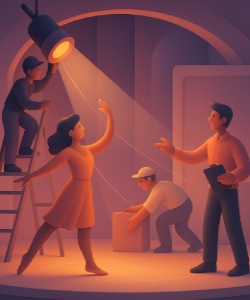
Live performance is inherently collaborative. No single individual can create a compelling show alone; it requires the integration of multiple disciplines, each contributing specialized skills. Directors guide the overall vision, while performers, designers, and technicians translate that vision into tangible experience. Communication, trust, and shared problem-solving are essential for successful collaboration.
Collaboration extends beyond artistic roles to include administrative and production staff who manage schedules, budgets, and logistics. Producers and stage managers coordinate rehearsals, technical needs, and audience services, ensuring that creative work can proceed smoothly. This ecosystem demonstrates how interdependence is at the core of live performance, allowing artists to focus on creativity while practical aspects are managed efficiently.
The Creative Process
Every performance starts with a spark of imagination. From this initial idea, the production develops in complexity and depth through experimentation, iteration, and dialogue.
From Concept to Performance
The path from idea to the stage moves through multiple periods of revision. Each period of brainstorming needs to be systematically supported by rehearsal and design development for the increasingly realized dynamic of the actual manifestation.
An initial idea, a subject matter, or a movement motif may all start a production. The above basic principle then undergoes a plethora of developmental stages via training, workshop learning, improvisation, and experimentation. The making of and technique of expression could also be subject to exploration on the part of a director or choreographer. The perception of the actors as they perform, based on training and personal history, give a good view of the process.
Rehearsals, on the other hand, foster improvement in relation to timing, gesture, or text. Designers set forth and urge on to create prototypes for scenery, costumes, and lighting, decreasing their work to accommodate the performance while it is itself in evolution. Feedback cycles among all team members ensure they work well together and result in a layered and constructed performance, thus reflecting not only the originating vision but also the widely inclusive contribution from all artists.
Experimentation and Risk-Taking
Artists push boundaries by testing new methods and forms. Taking creative risks allows performance arts to evolve and remain relevant.
Performance arts thrive on experimentation. Creative teams test new ideas, challenge conventional structures, and explore unconventional narratives or movement vocabularies. This willingness to take risks leads to innovation, pushing the boundaries of what live performance can convey. Audiences, in turn, engage with work that surprises, challenges, and resonates on multiple levels.
Innovation often involves interdisciplinary approaches, such as combining dance with digital projection, incorporating live improvisation into scripted theatre, or integrating audience interaction. Each experiment requires adaptability, technical skill, and mutual respect among team members, highlighting how risk and creativity coexist in the rehearsal process.
Training and Development
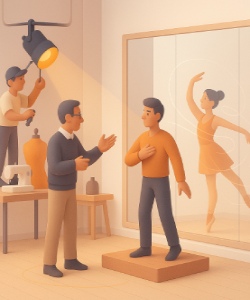
Learning the craft is a lifelong journey. Formal and informal training environments provide the foundation for skill, discipline, and creative growth.
Mastering a performance discipline requires extensive training. Performing arts schools, conservatories, and professional programs offer structured instruction in technique, theory, and creative practice. Students develop both specialized expertise and cross-disciplinary skills, preparing them for the multifaceted demands of professional work.
Training emphasizes repetition, feedback, and self-reflection. Actors rehearse lines and explore emotional nuance, dancers perfect movement vocabulary, and designers experiment with visual storytelling. Collaborative projects during training mimic professional environments, allowing students to practice communication, problem-solving, and artistic negotiation. This process not only builds skill but fosters resilience, discipline, and adaptability, qualities essential to a sustainable career in the arts.
The Role of Audience
Performances are incomplete without engagement. Audiences influence energy, pacing, and the overall impact of the work.
The audience is an active participant in live performance. Unlike film or recorded media, theatre and dance rely on real-time engagement, creating a dynamic exchange between performers and viewers. Audience reactions, laughter, silence, applause, inform pacing and intensity and can shape performers’ choices in real time.
Live performance thus exists as a dialogue: the creation is shared, experienced, and interpreted collectively. This interaction underscores the unique power of theatre and dance to foster connection, empathy, and reflection.
Performance Spaces & Venues
Where a performance takes place can shape the entire audience experience. The physical space influences how performers move, how sound travels, and how design elements are perceived.
Theatre and dance take place in a wide range of venues, from intimate black-box studios to grand proscenium theatres. Each space presents unique opportunities and challenges. Small venues encourage closeness and immediacy, allowing subtle gestures and nuanced expressions to be appreciated. Larger theatres require performers to project more and rely on design elements, lighting, and sound to maintain audience engagement across distance.
Flexible performance spaces, such as outdoor stages or site-specific installations, offer even more possibilities. They challenge artists to adapt choreography, staging, and acoustics to the environment, often creating immersive experiences where audiences feel physically and emotionally part of the performance. Understanding the characteristics of different venues is essential for both creators and audiences to fully appreciate live art.
Technology in Performance
Technology increasingly shapes how performance is created and experienced. From lighting rigs to digital projections, technical innovation expands artistic possibilities while adding complexity to production.
Lighting technology, sound systems, and automated stage mechanics allow designers to craft precise atmospheres and dynamic visual effects. Projection mapping and digital scenery can transform a stage instantly, providing versatile settings for storytelling. In dance and theatre, wearable sensors or motion capture technology can integrate live performers with multimedia elements, creating a fusion of human skill and digital innovation.
Career Pathways in Performance Arts
The performing arts offer diverse professional avenues. Understanding the range of roles and responsibilities helps aspiring performers, designers, and production staff navigate potential career paths.
Performers may specialize in acting, dance, or music, but cross-disciplinary skills are increasingly valuable. Designers focus on lighting, sets, costumes, or sound, often collaborating across multiple projects to refine their craft. Directors, choreographers, and producers oversee the creative and logistical aspects of production, guiding the team toward a cohesive vision. Technical and administrative roles, stage management, production coordination, and arts administration, are equally crucial, ensuring shows run smoothly and sustainably.
The Living Art of Performance
The world of theater and dance, however, is constantly evolving, creative, and dynamic. The lived moment of acting, choreography, design, and pushing technology somehow serves to build an ephemeral, unforgettable dynamism. Experimentation, the exchange of culture, and the space where artists and audiences interact all signify the spirit of performance. Meeting the essentials of creation, discipline-based skills, the nature of collaboration, the dynamics of relating to rehearsal, considerations of venue type, and accommodation and integration of technological mechanisms provides crucial understanding into the birth, form, and...of the live art; necessary preparation for the exploration of training in this area and possible career pathways; and thus gives the complete perspective to such a form of incredible expression and highly transforming means of human creativity.
Quick Links
The great playwright, Henrik Ibsen, was born on this day in 1828:
— Poetic Outlaws (@OutlawsPoetic) March 20, 2024
"I don't imagine you will dispute the fact that at present the stupid people are in an absolutely overwhelming majority all the world over." pic.twitter.com/odyRNTZH0R
With the kind support